
.svg)

Learning you have a cavity can make your stomach drop, especially if you've never had a filling before. It's easy to picture a long, uncomfortable procedure, but thanks to modern dental care, getting a cavity filled is one of the most common procedures in dentistry because more than 90% of adults ages 20 to 64 have experienced tooth decay in their permanent teeth.
While getting a dental filling is usually straightforward, patients who’ve never had a dental cavity often wonder what it will feel like, how long it takes, whether it hurts, and what recovery looks like afterward.
Continue reading to learn exactly what happens when you get a cavity filling, what you can expect before, during, and after your appointment, and where to find the best dentist in Weehawken for tooth-colored fillings.
How Do Dentists Fill a Cavity? A Step-by-Step Guide
A cavity filling is a restorative dental procedure that removes decayed tooth structure and restores the strength, shape, and function of a tooth. The procedure usually takes between 30 and 60 minutes for a single filling, although larger cavities or multiple teeth may take longer.
- Your appointment will begin with an examination of the tooth and dental X-rays to determine how far the decay extends. This is because cavities can spread beneath the enamel before they become visible on the surface. A dental X-ray helps your dentist confirm that a filling is the right treatment and that the decay has not reached the tooth's nerve.
- If the cavity is deep or located in a sensitive area, your dentist will numb the tooth and surrounding tissue with a local anesthetic. Most patients feel a quick pinch from the injection followed by pressure for a few seconds. Once the area is numb, you will only feel movement and vibration during the procedure without feeling pain.
- Next, the dentist removes the decayed portion of the tooth using specialized instruments. A dental drill or laser can be used to remove decayed parts of a tooth while preserving as much healthy enamel and dentin as possible.
- After all the decay has been removed, the tooth is carefully cleaned to eliminate bacteria and debris.
- The filling material is then placed in small layers. Each layer is hardened with a blue curing light before the next one is added. Building the filling gradually reduces shrinkage and allows the dentist to recreate the natural shape of the tooth.
- Lastly, the filling is shaped, which includes smoothing rough edges, checking your bite, and polishing the restoration.
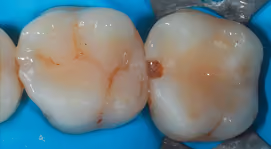 Fig 1: Dental cavity on the side of the tooth
|
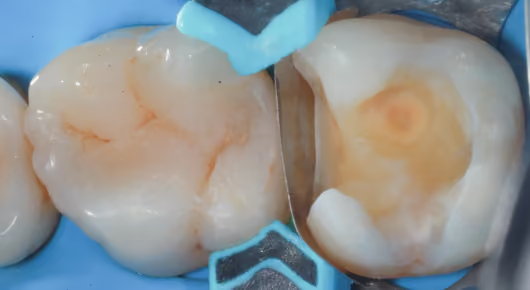 Fig 2: Remove the tooth decay and rebuild the wall
|
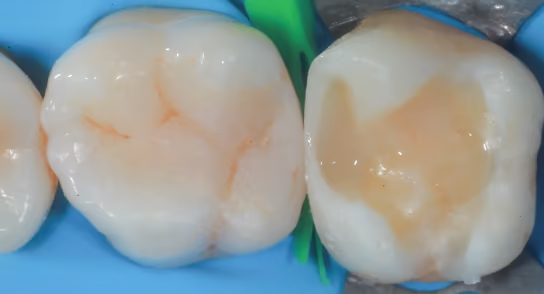 Fig 3: Fill the cavity with tooth-colored composite resin
|
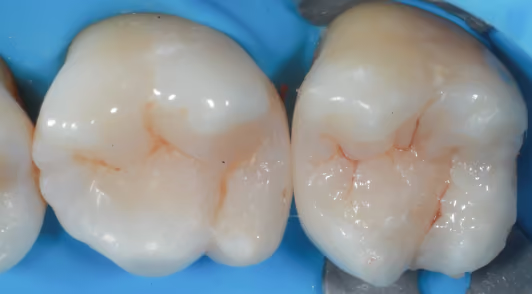 Fig 4: Completed restored tooth
|
Modern Matrix Systems for Improved Comfort and Strength After a Filling
Depending on the location of your cavity, rebuilding the contact point between neighboring teeth may be necessary. If decay develops between two teeth, your dentist temporarily places a thin metal band called a matrix around the tooth. Small matrix wedges and separation rings help create a tight, natural contact. This is an important step because a loose contact allows food to become trapped between teeth, increasing the risk of future cavities and gum irritation. Using an advanced sectional matrix system also helps restore the tooth's natural shape, making the finished filling feel and function more like your original tooth.
For those near Hoboken, Bulls Ferry, West New York, or Edgewater, Dr. Kaplan uses the Garrison Matrix System, which is specifically designed to create predictable tooth separation, improve the seal where the filling meets the tooth, and help recreate a natural contact point. The system allows for precise placement of the filling while reducing the risk of gaps, overhangs, and food traps between teeth.
Does Getting a Cavity Filled Hurt?
Getting a cavity filled is usually not painful because the tooth is thoroughly numbed before treatment begins. During the procedure, you will likely notice pressure, vibration, water spray, and the sound of dental instruments, but sharp pain is not expected.
After getting a cavity filled, it is common to experience tooth sensitivity for a few days. During this time, cold drinks, sweet foods, or biting down firmly may briefly trigger slight discomfort. This happens because the nerve inside the tooth has been mildly irritated during treatment. These symptoms usually improve on their own without additional dental treatments.
Composite vs. Silver Fillings: Which Filling Material Is Best?
Composite fillings are the most common choice today because they closely match the natural color of your teeth and bond directly to the tooth structure. However, silver amalgam fillings remain a durable option in some situations, particularly for large restorations in areas exposed to heavy chewing forces. The best choice depends on several factors, including the tooth's location, the size of the cavity, your bite, and cosmetic goals.
Some question the safety of filling materials. Both composite and silver fillings have been extensively studied and are considered safe by major dental and public health organizations when used appropriately. While composite fillings offer excellent aesthetics and strong performance for most patients, the ideal material depends on the specific tooth rather than a one-size-fits-all approach.
What Happens After Getting a Cavity Filling?
Most patients return to normal activities immediately after getting a dental filling. The biggest limitation is waiting for the numbness to wear off before eating so you do not accidentally bite your cheek, tongue, or lip.
In the first few days after getting a filling, you may notice:
- Mild sensitivity to cold drinks or sweets for several days
- Tenderness when chewing firm foods
- Slight awareness that the tooth feels different
- Temporary gum soreness if a wedge or matrix was placed between the teeth
These symptoms generally improve within days to a couple of weeks.
Finding the Best Dentist in Weehawken for Tooth-Colored Fillings
A cavity filling is the best way to stop tooth decay before it leads to needing more extensive treatment, like a root canal or tooth extraction. Those near Hoboken, Bulls Ferry, West New York, or Edgewater who are looking for the best tooth-colored fillings can trust the expert team at Skyline Dental Designs. Our team is led by Dr. Kaplan, who completed his General Practice Residency at Newark Beth Israel Medical Center, where he received advanced training in restorative dentistry and the management of complex dental cases. Combined with graduating in the top 5% of his dental school class, that experience helps him restore teeth with the precision needed for fillings that look natural, feel comfortable, and support your long-term oral health.

.svg)


.svg)
.svg)
.svg)
.svg)


.svg)